

THE BOP ADMINISTRATIVE REMEDY PROCESS DESIGNED TO DENY HEALTHCARE
AN OVERVIEW OF A VERY COMPLICATED AND ARDUOUS PROCESS
Cut-rate care: The systemic problems shaping ‘healthcare’ behind bars
- In correctional healthcare systems, care is secondary to controlling costs and avoiding lawsuits — a problem plaguing both private and public healthcare delivery. What will it take to get people the care they need?
Administrative Remedy Program, PS 1330.18
PURPOSE AND SCOPE §542.10
**a. Purpose.** The Administrative Remedy Program is designed to provide inmates with a formal process for reviewing issues related to their confinement.
- Grievance systems are designed to help incarcerated individuals address issues like inadequate medical care or harassment.
- However, in practice, they often face numerous rules and rarely find success in seeking relief. Many people in the U.S. struggle to access basic medical care, but incarcerated individuals face even greater challenges, including limited choice in doctors and continuity of treatment. Since 2000, about half of state prison systems have been court-ordered to enhance their mental and medical healthcare due to inadequate conditions.
THE ADMINISTRATIVE REMEDY PROCESS, ASSUMPTIONS.
If you are too ill to go through the process, you’re left at the mercy of the BOP, fellow inmates, and ultimately either loved ones with Power of Attorney at home or outside legal counsel. Should you be fit enough to go through the process, the BOP is very strict as to following the procedure.
- THE COMPLAINT YOU ARE MAKING, AND WHAT YOU WANT, OR THE RESOLUTION YOU ARE LOOKING FOR MUST BE IDENTICAL FOR ALL FORMS (THE BP-9, 10, 11, AND 2241). THEREFORE, MAKE 4 COPIES OF EACH: THE BP-10 (SHOULD INCLUDE A COPY OF THE BP-9), THE BP-11 (SHOULD INCLUDE COPIES OF THE BP-9 and 10). THE 2241 (SHOULD INCLUDE COPIES OF THE BP-9, 10, and 11).
- WITH NO COPY MACHINE, HANDWRITTEN IS ACCEPTABLE – EACH EXACTLY THE SAME.
- WITH NO CASE MANAGER (OR NO ONE TO SUPPLY THE FORMS, WRITE AT THE TOP OF EACH BLANK PAGE THAT THERE WAS NO STAFF TO PROVIDE THE FORMS. THIS IS OK.
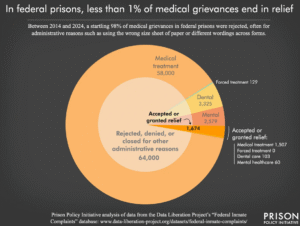
- Dental and Mental Health grievance categories had the highest rates of these rejections: 78% of dental and 83% of mental health grievances were tossed out for administrative reasons, including cases that had reached the appeals stage.
h
L
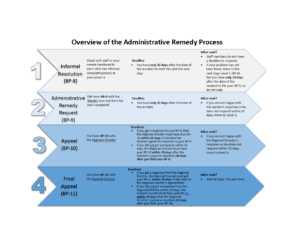
THIS IS AN OVERVIEW SUMMARY. DETAILS ARE AVAILABLE VIA THE LINKS BELOW.
The BP-9 Goes to The Warden
- They have 20 calendar days to deny, agree, or take no action. Taking no action is a denial. Now you have to submit the BP-10
The BP- 10 Goes to The Regional Director
- They have 30 calendar days to deny, agree, or take no action. Taking no action is a denial. Now you have to submit the BP-11
The BP- 11 Goes to The BOP General Counsel in Washington, DC
- They have 40 calendar days to deny, agree, or take no action. Taking no action is a denial. Now you can submit a 2241 to the judge.
The 2241 FORM TO THE DISTRICT COURT
- THIS MUST BE THE SAME AND HAVE ATTACHED YOUR BP-9, 10, 11)
This is an arduous process, and some fail to complete it. Most inmates have not been taught this, so they may not even be aware that it is an option. Other inmates may know how, and that could be their lifeline.
s
l