Q
YOUR MEDICAL CARE, PLACEMENT, AND SENTENCE.
a
The Probation Officer Who Will Be Interviewing You (The PSI), Is The Most Important Person You’ll Meet – Because Your Judge Will Depend On Them For Recommending Your Sentence. This Is Your Moment To Make A Great First Impression.
A
- THIS IS THE SAME OFFICER WHO WILL INTERVIEW AND INVESTIGATE YOU. It makes sense then to do everything possible to be prepared, make their job easier, and possibly get them to “Believe in You.”
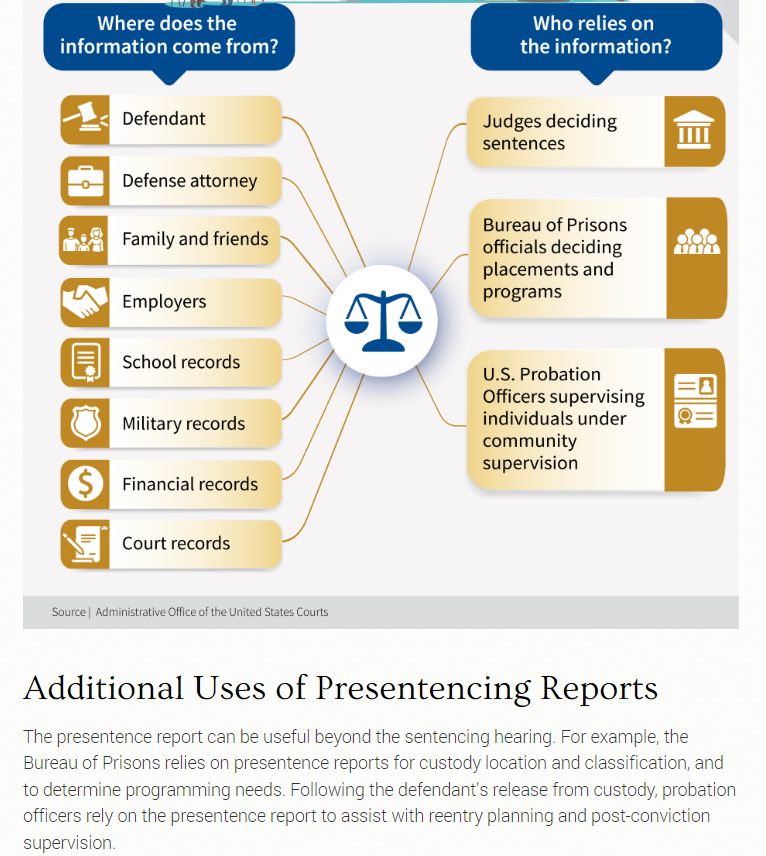
- PRESENTENCE INVESTIGATION FOLLOWS THE INTERVIEW and is a normal part of the criminal justice system. It provides an in-depth look at a defendant’s personal history. These assessments give judges valuable insights to help determine fair and appropriate sentences. This article discusses their importance, the process of conducting them, and their impact on sentencing decisions, with insights from Dr. Blatstein.
- A Probation Officer, a qualified official, conducts an interview and investigation before sentencing. It involves gathering detailed information about the defendant, including their criminal history, family background, employment status, and psychological profile. This comprehensive evaluation helps judges make informed decisions by considering the unique circumstances of each case, ultimately promoting a more just and rehabilitative approach to sentencing. You want to make a great first impression by being prepared. You do not want to anger this person!
a
DOCUMENTS AND OTHER PREPARATION FOR YOUR PRESENTENCE INTERVIEW
A
HOW CAN YOU MAKE A GREAT FIRST IMPRESSION AT YOUR INTERVIEW?
a
The probation officer will have contacted your attorney to request a comprehensive list of documents. You must organize these documents carefully and ensure that they are spell-checked for accuracy. The officer only has the DOJ’s narrative from your indictment to understand who you are. If you feel this narrative does not fully reflect your true self, including essential details about your personal history and the nature of your offense (without making excuses), now is the ideal time to craft your personal narrative. Use the next three months effectively to articulate your story and submit all of the information requested 1-2 weeks before the meeting. This is your opportunity to present a more complete picture of yourself.
a
a
Then, during the interview, the probation officer has time to get to know you personally and ask any remaining questions they may have. Further, they may appreciate your efforts in getting them the necessary information, showing that you respect their time.
- Mental/Emotional Health
- Substance Abuse
- Education
- Employment
- Acceptance of Responsibility
- Criminal History
For each client, we create an individual client profile or history.
A
A
IF YOU ARE NOT SURE WHAT TO DO FIRST, START WITH A FREE CONSULTATION FOR YOU OR A LOVED ONE. THIS IS MY PERSONAL CELL( 240.888.7778), AND I RETURN ALL OF MY CALLS. –Dr. Marc
We are not Attorneys; you need Legal Representation.
a
A
a
THE PERSONAL NARRATIVE – MAY BE APPRECIATED BY YOUR PROBATION OFFICER AND YOUR JUDGE
a
a
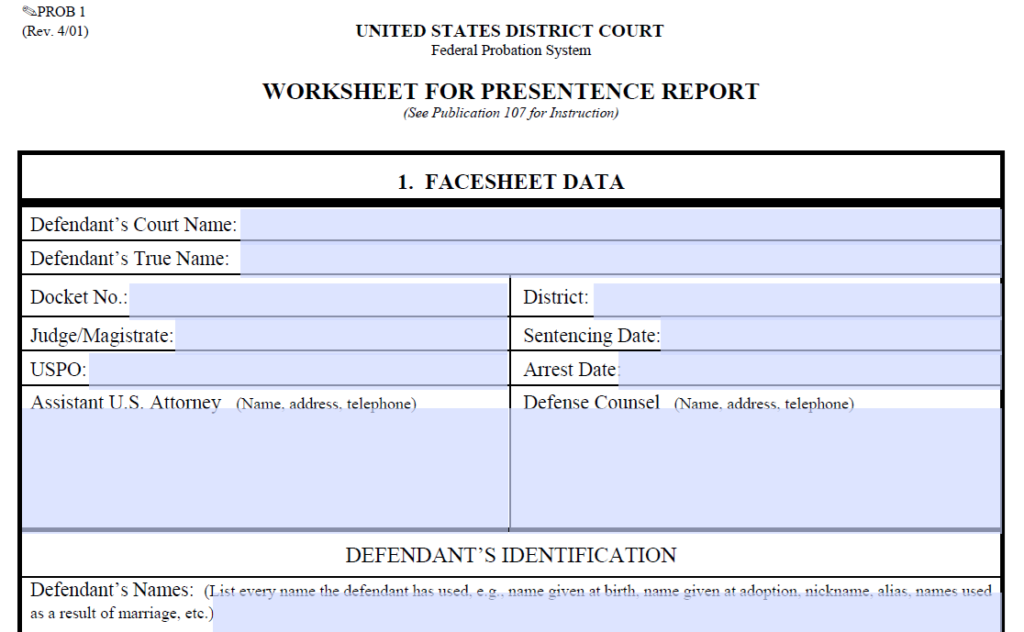
Crafting a Compelling Narrative can give the Probation Officers all the essential information they need for their final report. By doing so, you demonstrate respect for their time and the seriousness of the meeting, which can positively influence their perception of you. They might walk away after meeting you, feeling that you are not as terrible as the Department of Justice depicted in your Indictment. While there are no guarantees, this approach might make the difference when they eventually speak with your judge! Most everything that the officer will have to fill into the “Worksheet For Presentence Report” you may have already covered in your narrative. Several topics,
- Background: To understand the defendant’s background, it is essential to examine their family dynamics, education, employment history, and past interactions with the legal system.
- Victims Statements: Look at the offense’s nature and circumstances, including the victims’ harm.
- Sentence Recommendations: We understand that each individual’s situation is unique, so our tailored sentencing recommendations aim to support accountability and personal growth. Options may include probation, which allows individuals to live in the community while receiving supervision; diversion programs, which vary by district and can help redirect people toward more positive paths; community service; and rehabilitation programs that specifically address challenges like substance abuse. While there are times when incarceration may be necessary for the safety of everyone involved, we are committed to contemplating each case to ensure we find a balance between justice and the chance for meaningful rehabilitation. We believe in the potential for change and strive to support individuals on their journey toward a better future.
- The main goals of prisons are:
- Retribution. Punishing the convicted by taking away their liberty and holding them accountable for their actions.
- Incapacitation. Removing dangerous individuals from society reduces their opportunities to commit crimes.
- Deterrence. Discouraging people from committing crimes makes them fear the consequences of getting caught.
- Rehabilitation. Preparing offenders for release by helping them to change their ways and reduce the risk of reoffending.
- The main goals of prisons are:
S
A
CHARACTER LETTERS
- These are letters that attest to your character. They can be from anyone who has known you long and remembers your good deeds—cutting grass, helping neighbors, a religious leader, a school person, a relative, or an employer. If someone is willing to hire you if their business is OK when you’re released, THAT IS A GREAT LETTER! They can add that they would consider minimum wage and be available at “this” address and number, as would the defendant, for unexpected visits. This should be added to your Narrative, Release Plan, and Memorandum, all provided to the P.O. 1-2 weeks before the Interview, and could be a focal point for the judge as a plan to reenter society once released – A VERY BIG DEAL.
a
A
Q
A
MEDICAL AND MENTAL HEALTHCARE ISSUES
- If the issues are severe enough to get on the record, judges prefer to ask questions directly to the physicians. Somehow, the council needs to make this happen. If the defense does not know anyone, they should ask the prosecutor who they use (it would be difficult for them to challenge on cross-examination), local federal defenders, or medical boards.
a
A
a
In Video 19.1. To increase your chances of a favorable outcome, it is recommended that you provide your Officer with all the requested documents, including your Biographical Background (such as medical records), Personal Identification, and a well-written Personal Narrative and Release Plan. You may also consider providing these in both written and video formats, as this can make it easier for the judge to understand who you are as an individual.
Prisoners have the right to receive adequate medical care per their constitutional rights. However, lawyers representing criminal defendants often do not understand what this entails and how to get treatment for their clients. This article addresses this knowledge gap by providing insights into the medical, mental health, and substance abuse programs and policies offered by the Federal Bureau of Prisons (BOP).
a
In this video, I read an article I co-authored and Published in The Federal Lawyer regarding Medical Care in Federal Prison. If you have a medical issue, I recommend listening; this is informative and detail-oriented. If you have questions, call me on my cell at 240.888.7778. I return all calls. -Dr. Marc
aa
a
A
A
A
A GREAT NARRATIVE INCLUDES EVERYTHING THE OFFICER NEEDS TO FILL OUT THEIR REPORT. YOU LOOK PREPARED, AND THEY MAY APPRECIATE YOUR EFFORTS IN RESPECTING THEIR LIMITED TIME AND TAKING THIS SERIOUSLY.
a
a
a
a
The Probation Officer representing the court will conduct your interview and complete the above “Worksheet For Presentence Report.” If one is not provided, ask if you can get one – but please Do Not Write On The Original Copy. Wait until you have a proofread and spell-checked draft completed.
A
a
When official, aka The Presentence Report, this report will influence your Judge at sentencing, the prison you go to, your security level, and how long your stay will be. It will determine the medical care you receive and your ability to participate in First Step Act Earned Time Credits toward early release.
The Presentence Report is known as ‘The Inmates Bible,’ it is the “Gift that Keeps on Giving,” as it remains on your record forever.
a
a
You have provided your background and personal information, answered the questions that all judges want to hear and learn about you through your written NARRATIVE, and provided everything in an organized format to your Probation Officer (PSI) 1-2 weeks before your interview.
- Now, at your interview, you and the officer have the time to have a casual conversation (with your attorney present), answering any questions they may have.
- In the end, your P.O. may come away from your meeting feeling that you are quite different than the person described in your Indictment as you came to the interview prepared, more than any other defendant they have interviewed recently. This, in turn, could result in a favorable recommendation to the Judge and a favorable Presentence Report.
- But remember that there are No Guarantees, as people are just people, and there are those who have good days and others who don’t.
- With that thought in mind, doing this work will ultimately benefit you in the long run.
A
INCLUDE COPIES
FOR THE PRESENTENCE REPORT
OF ALL PERSONAL IDENTIFICATION AND BIOGRAPHICAL INFORMATION ARE REQUESTED
a
A
Possible Specific Medical Care Needs,
- For a person facing custody, I have been stressing for years – that preparing your comprehensive medical history long before the Presentence Interview is critical to providing the court and BOP with your medical background as a baseline to refer to.
- When it comes to providing medical care to individuals with unique medical conditions while in the Bureau of Prisons (BOP), it is crucial to have a comprehensive medical history that includes all medical records, including reports of surgeries (including pathology reports), diagnostic X-rays, CT, MRI, ultrasounds, EEGs, EKGs, and PET scans (Reports on CD or Flash Drives).
- All recent blood tests, prescriptions (Drugs and Medical Devices), hospital records, and treatment plans from their treating physician.
- To ensure that the patient/inmate receives the appropriate care, it is essential to gather all relevant documentation and contact information for physicians, including their name, phone number, email, and address.
- It is advisable to prepare thoroughly for The Presentence Interview, especially if there are concerns about medical care from the patient, their attorney, or treating physician. Doing so makes it possible to plan strategically and ensure the patient-inmate receives the necessary care during their time in the BOP. Still, remember, there are no guarantees once incarcerated, so attention to detail at the start is in your long-term interest.
- Why is this detail important?
a
a
A
A2023 Guidelines Manual Annotated
Included From The Defendant: Their Narrative, Character Letters, Release Plan And Allocution