


$14.6 Billion Warning: Lessons from the Largest Healthcare Fraud Take-down in U.S. History
The Era of Healthcare Fraud Enforcement
H
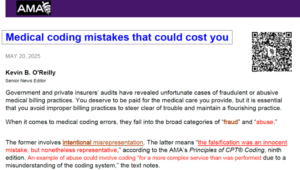
Federal healthcare enforcement is changing rapidly. Investigations are larger, faster, and increasingly driven by AI and Data Analytics. For physicians, clinic owners, and healthcare executives, that means routine practices—from billing decisions to clinical judgment—can quickly become the focus of federal scrutiny.
K
Real-Time Monitoring
 The Department of Justice is no longer relying primarily on patient complaints or whistleblowers. Federal agencies now use advanced analytics and centralized monitoring systems to track billing patterns nationwide.
Algorithms can detect irregular claims before payments are even issued. In one recent enforcement effort, Operation Gold Rush, AI Machine-Learning tools identified billions in suspicious claims, leading to arrests across multiple jurisdictions.
For providers, compliance programs built for yesterday’s regulatory environment may no longer be enough.
L
When Medical Judgment Is Challenged
Some of the most controversial cases arise from disputes over medical decision-making.  Addiction treatment providers, for example, have faced allegations that hundreds of millions of dollars in billed services lacked medical value.
These cases often turn on competing expert opinions and evolving standards of care. Even good-faith clinical decisions can come under scrutiny when viewed through billing data and regulatory interpretation.
L
Telemedicine and Opioid Prescribing
Telehealth expansion during the pandemic created new enforcement risks. Federal prosecutors have charged dozens of defendants in telemedicine cases involving more than $1 billion in claims.
Pain management practices also remain a major focus. Investigators now rely on data analytics to identify outlier prescribing patterns, often triggering investigations into opioid prescribing practices.
L
Enforcement Is Increasingly Global
Healthcare fraud investigations frequently involve international companies, marketing groups, and cross-border financial transactions. Charges often include conspiracy, money laundering, and racketeering, reflecting the global reach of modern healthcare enforcement.
L
Financial Risks
Federal prosecutors can freeze or seize assets connected to alleged fraud before a case is  resolved. In recent enforcement actions, authorities seized hundreds of millions of dollars in cash, property, and cryptocurrency.
For healthcare professionals, that can mean bank accounts frozen, practices disrupted, and personal assets at risk based solely on allegations.
p
 Steps Healthcare Professionals Could Take to Reduce Their Risk:
- Maintain clear documentation supporting all clinical and billing decisions.
- Implement modern, technology-driven compliance programs.
- Review telemedicine protocols and prescribing practices.
- Verify marketing partners and foreign vendors.
- Consult experienced counsel at the first sign of an investigation.
p
Choosing the Right Legal Representation For You
Healthcare fraud cases are prosecuted under federal law and follow the same procedures in federal courts nationwide. Because of this, experienced federal defense attorneys often represent clients across the country through pro hac vice admission while working with local counsel.
In federal cases, the most important factor is not the lawyer’s location but their experience handling complex healthcare investigations and federal prosecutions.
L
My Takeaway
Healthcare enforcement has entered a new era defined by data analytics, global investigations, and aggressive prosecution strategies. Here are just a few.
- Medicare False Claims
- Medicare Advantage: The Largest Target in the Room, Managed Care Fact Sheet—is now DOJ’s most aggressive FCA battleground.
- PPP Loan Fraud
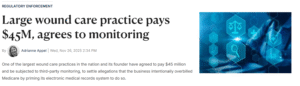 Wound Care: Where Civil and Criminal Convergend Care: Where Civil and Criminal Converge
For medical professionals, the message is clear: strong compliance and experienced legal counsel are essential. In many cases, by the time an investigation becomes visible, it may already be well underway.