

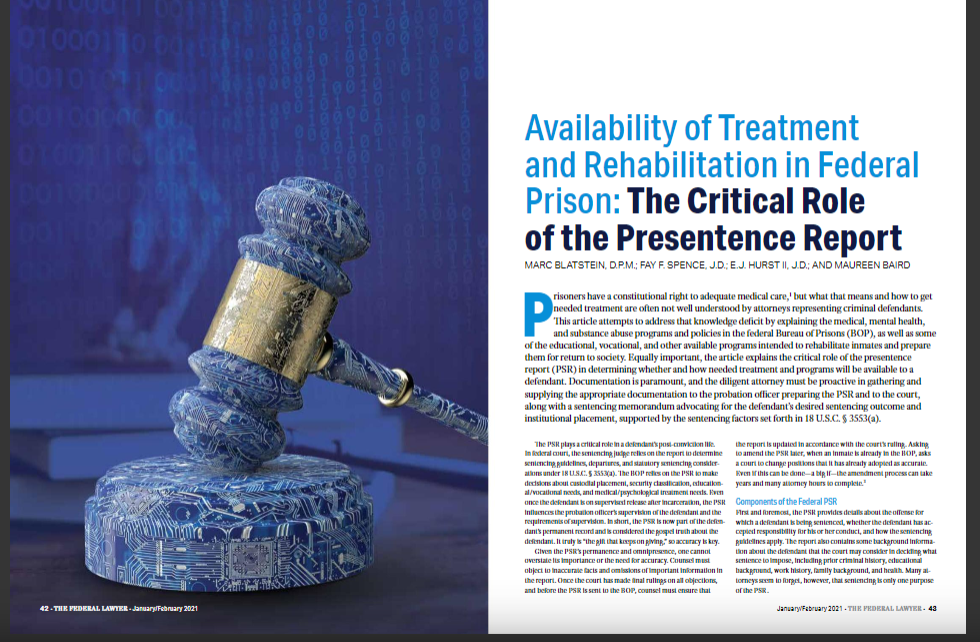
Federal Presentence Interview & PSR Preparation
Your Presentence Report (PSR) May Influence Every Stage of Your Federal Journey
The Presentence Report (PSR) is one of the most important documents in the federal criminal justice system. It is used by the Court at sentencing, the Bureau of Prisons (BOP) for designation and programming decisions, and Probation during supervised release.
The information included in your PSR can impact:
- Sentence recommendations
- Security classification
- Prison placement
- Medical and mental health care
- Federal prison programming
- First Step Act opportunities
- Risk assessment determinations
- Conditions of supervised release
Once completed, the PSR becomes a permanent part of your federal record. Accuracy, completeness, and preparation matter.
Watch the videos below to learn why proper preparation before your Presentence Interview can have a lasting impact on your future.
Why Preparation Before Your Presentence Interview Is Critical
Many defendants underestimate the significance of the Presentence Investigation Interview (PSI). This interview serves as the foundation for the Presentence Report prepared by U.S. Probation.
A well-prepared PSI submission can help ensure that important aspects of your background, health, family history, educational achievements, employment history, and rehabilitative efforts are properly documented.
We encourage clients to organize and submit supporting materials well in advance of their interview date whenever possible.
Recommended Documents
- Biographical information
- Educational records
- Employment history
- Medical and mental health documentation
- Military records
- Professional licenses and certifications
- Financial information
- Family and community support documentation
Tell Your Story Through a Personal Narrative
Federal prosecutors tell the government’s version of events. Your personal narrative gives you the opportunity to tell your story.
A thoughtful narrative can help the Court and Probation Officer understand:
- Who you are beyond the offense conduct
- Your personal and professional background
- Challenges and accomplishments throughout your life
- Acceptance of responsibility
- Genuine remorse
- The lessons learned from your experience
- Your commitment to rebuilding your life
An authentic narrative is not about making excuses. It is about providing context, accountability, and demonstrating personal growth.
Character Reference Letters Matter
Strong character reference letters can help provide additional insight into your character, values, and support system.
Letters may come from:
- Family members
- Friends
- Religious leaders
- Community leaders
- Business associates
- Employers
Effective letters typically acknowledge awareness of the offense, describe the writer’s relationship with you, explain why the behavior is inconsistent with your character, and express confidence in your ability to move forward productively.
Build a Meaningful Release Plan
Judges, Probation Officers, and the Bureau of Prisons often look for evidence that an individual has a realistic plan for success after incarceration.
A comprehensive release plan may include:
- Stable housing
- Employment opportunities
- Family support
- Community support
- Reentry resources
- Counseling or treatment plans
- Educational goals
- Accountability measures
A strong release plan demonstrates preparation, responsibility, and commitment to successful reintegration.
Preparing for Allocution
Before imposing sentence, the Court may provide you with an opportunity to speak directly to the Judge.
This statement, known as allocution, can be one of the most important moments in your case.
A meaningful allocution should reflect:
- Personal accountability
- Remorse for those harmed
- Understanding of the consequences of your actions
- Commitment to change
- Respect for the Court and the legal process
When delivered sincerely, allocution allows the Judge to hear directly from you, not just from attorneys, reports, and court filings.
Federal Prison Placement Considerations
While the Bureau of Prisons makes the final designation decision, defense counsel may request placement recommendations supported by legitimate factors such as:
- Medical needs
- Mental health treatment
- Educational programs
- Substance abuse treatment
- Family considerations
- Reentry preparation opportunities
Proper planning before sentencing helps ensure these factors are clearly documented and presented.
The PSR Continues to Affect Your Future
The influence of the Presentence Report extends far beyond sentencing.
The PSR is relied upon by:
- Federal Judges
- The Bureau of Prisons
- U.S. Probation Officers
- Reentry and halfway house personnel
Because it remains part of your permanent federal record, investing the time to prepare thoroughly before your Presentence Interview may provide benefits throughout your incarceration and supervised release.
Start Preparing Today
Whether you are preparing for an upcoming Presentence Interview, developing a personal narrative, gathering character reference letters, creating a release plan, or preparing for allocution, early preparation can make a difference.
Watch the videos on this page to learn more about the Presentence Report process and the steps you can take to present the most complete and accurate picture of your life, your progress, and your future goals.
Questions? Contact Dr. Marc directly at 240-888-7778 for a confidential consultation.
a
a
Your Presentence Report (PSR):
- Judges use it to determine the length of a sentence.
- The Bureau of Prisons (BOP) uses the same report for your prison placement.
- Probation again uses it during Supervised Release.
- Lastly, this same PSR becomes a permanent part of your record, aka the inmate’s Bible.
It truly is the gift that keeps on giving.