

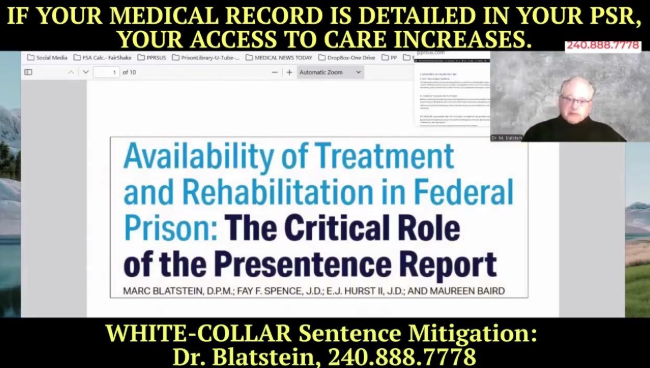
BOP National Formulary 2026: Federal Prison Medication Access And Policies
Understanding the Federal Bureau of Prisons’ medication policies is an important part of preparing for federal incarceration, particularly for individuals with chronic medical conditions, ongoing prescriptions, or specialized treatment needs.
Court orders recommending or ordering specific treatments should be referred to the appropriate BOP attorney(s).
The Federal Bureau of Prisons (BOP) National Formulary, Winter 2026, outlines policies governing medication approvals, therapeutic substitutions, prescription administration, and other aspects of correctional healthcare. These requirements can affect how medications are prescribed, dispensed, and monitored after an individual enters federal custody.
For individuals preparing for federal sentencing, understanding these policies can help identify medical issues that warrant attention before incarceration.
Physician Prison Consultants (PPRSUS) provides medical consulting and federal sentencing preparation services, including assistance with documenting medical histories and identifying healthcare considerations relevant to incarceration.
What Is the BOP National Formulary?
The BOP National Formulary establishes medication-related guidance for federal correctional healthcare. It addresses approved medications, prescribing requirements, therapeutic alternatives, and procedures for requesting certain medications outside the formulary.
A medication prescribed by a community physician may not automatically be continued in federal prison. Treatment decisions may depend on the individual’s medical condition, clinical documentation, applicable BOP policies, medication availability, and review by institutional healthcare professionals.
Understanding these requirements before sentencing can help individuals and their attorneys identify potential continuity-of-care concerns.
BEMRx and BEMR: Federal Prison Medication Management
The BOP uses electronic systems to support pharmacy operations and medical recordkeeping.
BEMRx: Bureau Pharmacy System
BEMRx supports pharmacy functions, including prescription orders, dosage information, and medication management processes required by BOP formulary requirements.
BEMR: Bureau Electronic Medical Records System
BEMR supports electronic medical documentation, including clinical information, relevant medical history, and treatment records.
Together, pharmacy management and medical documentation are important components of correctional healthcare. However, an existing prescription or medical record does not guarantee that a particular medication will be approved or continued after incarceration.
Individuals with ongoing medical needs should organize their records before sentencing so staff can review relevant information.
Non-Formulary Medications: Approval and Clinical Documentation
Not every medication prescribed outside prison is included in the BOP National Formulary. When a medication falls outside applicable formulary requirements, authorization may be necessary before treatment can begin or continue under the relevant procedures.
A non-formulary request may require clinical justification and supporting documentation, such as:
- The diagnosis requiring treatment.
- The current medication and prescribed dosage.
- Previous medications tried and the results.
- Documented adverse reactions or treatment failures.
- Relevant specialist consultations and recommendations.
- The clinical reasons a particular medication may be necessary.
The BOP formulary also addresses limited circumstances for temporarily continuing non-formulary medication when routine authorization is not immediately available, including certain urgent continuity-of-care situations.
These provisions should not be interpreted as blanket permission to begin routine, non-emergency treatment without authorization.
Key consideration: A prescription from a community physician does not guarantee approval of the same medication in federal prison.
Accurate documentation may help explain the medical rationale for treatment, but approval remains subject to applicable BOP requirements and clinical review.
Generic Medications and Therapeutic Substitution
BOP medication policies address the use of generic and biosimilar products, where applicable, as well as therapeutic substitution.
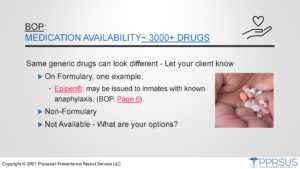
Therapeutic substitution involves replacing a prescribed medication with an alternative considered therapeutically appropriate under established procedures. Although a substitute may serve a similar clinical purpose, medication changes can be significant for individuals with complex medical histories or previous treatment difficulties.
Before sentencing, individuals should document any known medication allergies, significant adverse reactions, unsuccessful treatment trials, and other clinically relevant concerns.
This information can help provide context when healthcare professionals evaluate treatment options in federal custody.
Directly Observed Therapy and Medication Administration
Certain medications may require supervised administration or additional monitoring under applicable BOP procedures.
Directly Observed Therapy (DOT) involves observing a patient take a medication. Depending on the medication and institutional policy, staff may administer it through a supervised medication line or another approved process.
The BOP formulary addresses administration procedures for selected medications, including certain injectable therapies.
Medication administration requirements vary according to the drug, clinical circumstances, and applicable institutional procedures. Individuals entering federal custody should not assume that community-based medication routines will remain unchanged.
GLP-1 Medications in Federal Prison (Even If Listed, Access Isn’t Guaranteed)
GLP-1 medications treat certain metabolic conditions, including type 2 diabetes and, for specific products and indications, chronic weight management.
The BOP National Formulary’s medication-equivalency guidance references several medications in this class, including:
- Wegovy® (semaglutide).
- Trulicity® (dulaglutide).
- Bydureon BCise® (exenatide).
- Victoza® and Saxenda® (liraglutide): Discontinued
A medication’s presence in formulary guidance does not mean it is stocked at every federal correctional institution, approved for every indication, or available to every patient.
Treatment decisions remain subject to the applicable prescribing criteria, clinical assessment, medication availability, and BOP policies.
Individuals currently receiving GLP-1 medications or other injectable therapies should organize documentation identifying the underlying diagnosis, treatment history, prescribed medication, and relevant clinical considerations before incarceration.
Chronic Medical Conditions and Federal Prison Transfers
Medical conditions can affect institutional healthcare planning and certain transfer decisions.
The BOP formulary identifies conditions that may warrant special consideration in this context, including:
- Diabetes mellitus and hypertension.
- HIV infection and liver cirrhosis.
- Cancer requiring active treatment.
- Dialysis.
- Uncontrolled asthma and chronic obstructive pulmonary disease (COPD).
- Seizure disorders or interruptions in seizure medication.
- Serious mental health conditions, including bipolar disorder and psychotic disorders.
- Anticoagulant therapy.
- Certain hepatitis C treatment regimens.
- Medications associated with withdrawal risks, including certain benzodiazepines, barbiturates, and narcotics.
The policy includes qualifications concerning treatment status and transfer priority. A listed diagnosis does not automatically establish eligibility for a particular institution or guarantee that a transfer will be prevented.
For individuals with significant medical needs, accurate documentation can help defense counsel explain the nature of the condition, ongoing treatment requirements, and potential healthcare considerations associated with incarceration.
Additional BOP Medication Policies
The Winter 2026 formulary addresses other medication-related procedures that may affect federal correctional healthcare.
Risk Evaluation and Mitigation Strategies (REMS)
Certain medications are subject to additional safety requirements under the FDA’s Risk Evaluation and Mitigation Strategies program. The BOP document addresses the institutional review and documentation requirements for these medications.
Naloxone and Opioid-Overdose Response
The formulary includes a naloxone protocol and standing-order provisions addressing opioid-overdose response, including requirements related to employee training.
Naloxone can reverse the effects of an opioid overdose and is an important component of emergency-response planning.
Self-Carry and Over-the-Counter Medications
The formulary addresses procedures governing selected medications that patients may carry themselves, as well as over-the-counter medications used within BOP institutions.
Permission to possess or use a medication depends on applicable policies and institutional procedures.
Nutritional Supplements and Medication Compounding
The document also includes requirements addressing nutritional supplement requests, non-sterile compounding, and related documentation.
These procedures support oversight of medication preparation and use within correctional healthcare settings.
Preparing Medical Records Before Federal Sentencing
Federal prison healthcare operates under different administrative, security, staffing, and medication-management requirements than community-based medical practice.
Formulary restrictions, authorization procedures, therapeutic substitutions, and institutional resources may affect how staff manage chronic conditions and provide ongoing treatment.
v
For that reason, address medical documentation before sentencing rather than leaving it entirely to the period after incarceration.
v
Individuals with significant healthcare needs should work with their defense counsel to organize relevant records, including:
- Current medication list: Medication names, dosages, schedules, and prescribing clinicians.
- Diagnostic records: Documentation supporting established medical conditions.
- Specialist evaluations: Relevant consultations, recommendations, and follow-up plans.
- Treatment history: Previous medications, unsuccessful therapies, and significant adverse reactions.
- Hospital and surgical records: Relevant procedures, complications, and ongoing treatment requirements.
- Laboratory and imaging reports: Recent findings pertinent to continuing care.
- Medical devices and therapies: Documentation of prescribed equipment and ongoing treatment needs.
The objective is to present an accurate, organized medical history that helps counsel identify relevant healthcare considerations during sentencing preparation.
Medical records do not guarantee a particular sentence, medication approval, institution, or treatment outcome. Nevertheless, documenting significant medical needs can help ensure important information is available when considering relevant decisions.
How Medical History Fits Into Federal Sentencing Preparation
Preparing for federal incarceration involves more than understanding the length of a potential sentence. Medical needs, treatment requirements, and practical healthcare considerations may also warrant attention.
The Presentence Investigation (PSI) and Presentence Investigation Report (PSR) process provides an opportunity to document relevant personal and medical information for consideration during sentencing.
Individuals with chronic illnesses, complex medication regimens, or specialized treatment requirements should discuss these concerns with their defense attorneys well before sentencing.
Early preparation can help identify missing records, clarify treatment history, and organize information relevant to sentencing mitigation and correctional healthcare planning.
The appropriate authorities and healthcare professionals make the final decisions on sentencing, institutional designation, medication approval, and medical treatment.
Physician Prison Consultants (PPRSUS): Medical Consulting and Federal Sentencing Preparation
Physician Prison Consultants (PPRSUS) provides medical consulting and federal sentencing preparation services for individuals facing federal incarceration and their attorneys.
Services include assistance with medical history documentation, Presentence Investigation preparation, and identifying healthcare considerations relevant to federal custody.
The goal is to help clients and counsel recognize the medical and practical issues that may arise during the transition from community-based healthcare to federal correctional medical care.
Understanding the BOP National Formulary, BEMRx, BEMR, and medication authorization procedures can be an important component of that preparation.
Prepare before sentencing. Document your medical needs. Understand the policies that may affect your transition into federal custody.
Learn more about Physician Prison Consultants at PPRSUS.com.