

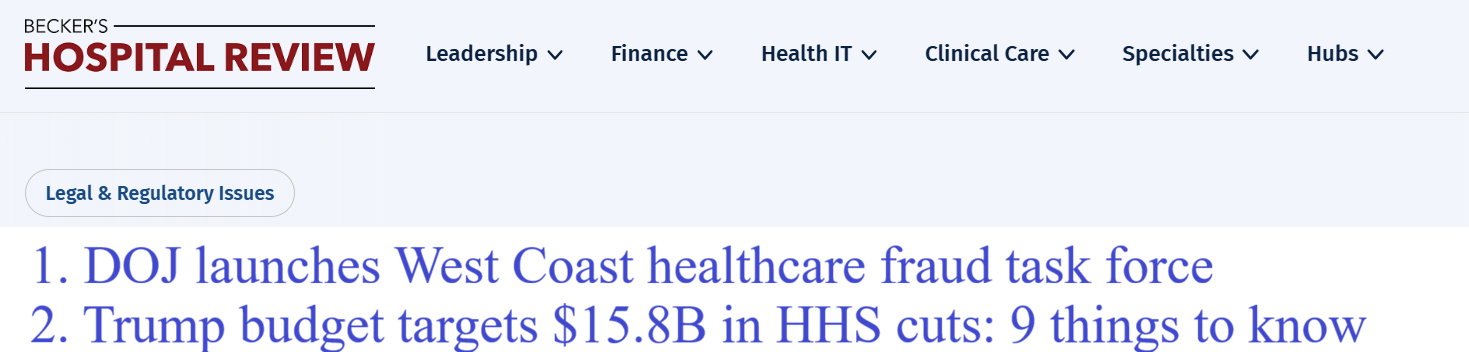
Healthcare, Still The DOJ #1 Target.
Becker’s Hospital Review: DEI- FCA- LGBTQ, & AVAILABILITY OF REPRODUCTIVE CARE, MEDICAID, AND ACA ACCESS.
*
The Fraud Division Launches West Coast Strike Force to Target Health Care Fraud Schemes Across Arizona, Nevada, and Northern California
April 30, 2026
*
RISK MANAGEMENT PREPARATION
- Keeping you, your practice, and business clear of a DOJ Audit is key to your finances and freedom. We know budgets are tight, and the DOJ is looking for convictions, but financial shortcuts in practice management aren’t the answer.
I understand that being involved in a DOJ healthcare inquiry is very stressful, as I went through this in 2006. Having experienced legal representation in cases like yours is crucial. If you’ve been found or pleaded guilty, call me. Preparation for your PSI and PSR is up to you.
j
THE NATIONAL HEALTHCARE FRAUD TAKEDOWN OF 2025.
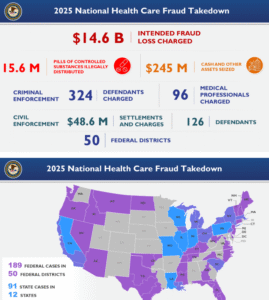
The department’s enforcement model has led to charges against over 6,200 defendants for billing more than $45 billion to federal healthcare programs and private insurers.
- Officials have announced an expansion in response to rising fraud levels in three regions, particularly in technology-driven schemes. “Silicon Valley has become a hotspot for healthcare fraud targeting taxpayer-funded programs like Medicare.” This comes after a record year in 2025, with over $15 billion reported in alleged losses from the National Health Care Fraud Takedown.
l
j
FINANCIAL STRESS – THE 2027 BUDGET.
The Trump administration’s fiscal year 2027 budget, released April 3, proposes a $15.8 billion cut to HHS, while requesting $1.5 trillion for defense, a 44% increase.
1. HHS faces a $15.8 billion cut. The proposed budget requests $111.1 billion for the Department of Health and Human Services (HHS) in fiscal year 2027, a 12.5% reduction from 2026. The administration described this cut as a means to eliminate “bloated and inefficient programs.” Under the One Big Beautiful Bill Act, which proposes nearly $1 trillion in Medicaid cuts, President Trump stated it is “not possible” for the federal government to sustain Medicare, Medicaid, and childcare funding. April 3rd, 2026
2. NIH loses $5 billion; 3 institutes eliminated. The budget requests $41 million for NIH research, representing a cut of approximately $5 billion compared to 2026 funding.
3. A new agency replaces several familiar ones: The American Health Agency (AHA) intends to improve efficiency by cutting $5 billion in funding for programs that are inconsistent with the Trump administration’s policy priorities. This reallocation ensures that the agency’s efforts align with administration goals.
4. Global health funding cut by $4.3 billion, PEPFAR restructured.
40% of the President’s Emergency Plan for AIDS Relief funds under the Biden administration supported service delivery, such as medications and testing, while the rest went to administrative costs and supply chain overhead. The budget cuts funding for some reproductive health services, circumcision programs, and LGBTQ-related health services.
5. The Hospital Preparedness Program would be eliminated. The The $240 million Hospital Preparedness Program, part of the Administration for Strategic Preparedness and Response, is facing elimination. This program has been essential for funding hospital surge capacity and disaster response.
Its potential removal is worrying as hospitals continue to learn from the COVID-19 pandemic and face future vulnerabilities.
C
6. VA healthcare investment spikes. EHR and AI implementation
7. AHRQ is effectively eliminated. The Agency for Healthcare Research and Quality would see a proposed $129 million cut.
8. LIHEAP scrapped — again. The administration is proposing to end the Low Income Home Energy Assistance Program.
9. WHO and the Pan-American Health Organization would be defunded entirely.
“These corrupt organizations have shown no independence from inappropriate political influences, such as when the WHO aided in the COVID-19 cover-up…”
History will be the judge.
><
p
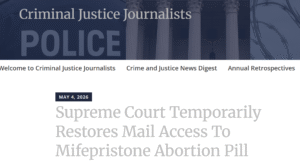
5-4-2026
5-1-2024
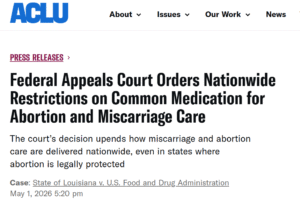
ACLU. Federal Appeals Court Imposes Nationwide Restrictions on Abortion and Miscarriage Medication, affecting care even in states where abortion is legally protected.
- Case: State of Louisiana v. U.S. Food and Drug Administration
- May 1, 2026
If the U.S. Supreme Court does not intervene, the Fifth Circuit’s ruling could disrupt miscarriage and abortion care nationwide. Currently, over 1 in 4 abortions in the U.S. are done via telemedicine. Removing this option would force patients who need mifepristone to travel long distances, despite experts agreeing that this has no safety benefit.
The FDA’s 2021 decision to eliminate in-person dispensing of mifepristone, made permanent in January 2023, was supported by extensive research and major medical authorities. Despite mifepristone’s safe use for over 25 years and strong public support for medication abortion, anti-abortion advocates continue to push for federal restrictions on it.
c