

FBI, DOJ TARGETING TELEMEDICINE AND OPIOIDS. MORE CPT CODES IS A RED FLAG NOW FOR MEDICARE ADVANTAGE PROGRAMS. 2026
TOPICS:
AI is the DOJ’s Tool of Choice.
Preparation
ACKNOWLEDGE THE IMPACT OF YOUR INDICTMENT.
- Pill Mill
- Health Care Fraud
- Distribution of opioids and other controlled substances.
THE DOJ WILL BE EXPANDING FROM THEIR WINS IN 2025
- Fraud Enforcement Isn’t Slowing Down — It’s Gearing Up
l
P
AI is the DOJ’s Tool of Choice. They don’t need sleep and are constantly monitoring and data-mining.
l

g
Their Multi-agent AI is not a future concept—it is an operational shift that businesses must prepare for now. Rather than deploying a single AI system, organizations are moving toward coordinated networks of specialized agents that can independently act, collaborate, and adapt in real time. Whether to go for a trial or a plea, this is a strategic decision between you and your attorney.
o
__
WHAT YOU CAN DO.
d
Preparation For Your Presentence Interview ⇒ Starts ASAP
d

As soon as you hear that the FBI is asking questions, their case against you is mostly complete. First, you need legal counsel with experience with cases like yours in the Federal Court. Second, if prison time is unavoidable, preparing for your interview (the Presentence Interview) is crucial. This is not just a form you can fill out on the spot, which is why your PSR is called the “Inmates’ Bible.”
Will you have the choice between a Minimum FPC (Free Standing Camp) vs a Minimum Satellite Camp (attached to a higher security facility)? There are differences.
s
Advice from Federal Judges – When To Start Preparing For Sentencing
p
ACKNOWLEDGE THE IMPACT OF YOUR INDICTMENT.
l
Judges know that crimes don’t happen in a vacuum. What were your reasons? Help them understand who
you are. If you don’t provide your Autobiographical Backstory, your indictment and charges will define who you are – to the court – through the length of your sentence.
j
___
WHAT THE DOJ IS DOING.
p
Pill Mill (Page 30, Below)

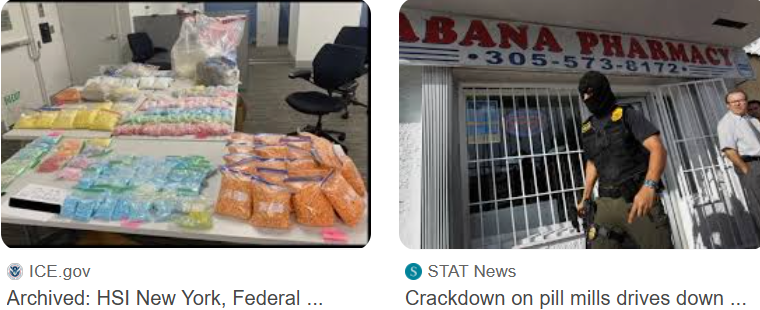
- Dr. Okafor wrote narcotic prescriptions for cash after minimal examinations. He issued oxycodone and promethazine with codeine prescriptions to undercover agents and other patients, many of whom had no legitimate medical need. In June 2025, Dr. Okafor was sentenced to 18 years’ imprisonment and ordered to forfeit over $213,000.
l
Health Care Fraud Unit (Page 31, Below)
- Texas pharmacist Dehshid “David” Nourian—who was convicted at trial for his role in a scheme to defraud the Department of Labor (DOL) through the submission of fraudulent claims for prescription compound creams— was sentenced to 17 years and six months in prison, ordered to pay over $115 million in restitution, and ordered to forfeit $405 million in seized assets.
l
Distribution of opioids and other controlled substances. (Page 37, Below)
- Neil K. Anand, M.D., was sentenced to 14 years in prison for the illegal distribution of opioids and other controlled substances. Dr. Anand ran in-house pharmacies and provided large quantities of medically unnecessary medications, including oxycodone, in order to obtain prescriptions. Unlicensed medical interns wrote prescriptions under minimal supervision, creating extreme risk for addiction, overdose, and other life-threatening consequences.
f
THE DOJ IS EXPANDING ON THEIR WINS FROM 2025
O
Fraud Enforcement Isn’t Slowing Down — It’s Gearing Up
- Expect aggressive — and possibly expanded — enforcement targeting fraud tied to federal programs. However, the new fraud division is ultimately structured, the message is clear: misuse of federal funds remains a top priority. The government will continue to rely on powerful tools like the False Claims Act to pursue companies, nonprofits, and other funding recipients.
- Politics shape priorities. Early signals suggest the division could operate out of the White House, with focus areas that may shift based on policy agendas. That adds uncertainty to how cases are selected and pursued.
- Compliance is your first line of defense. Organizations receiving federal funds — especially in highly regulated sectors — should reassess internal controls, billing practices, eligibility certifications, and representations made to the government.
A HEALTHCARE RISK MANAGEMENT, IN-HOUSE POLICY IS YOUR BEST DEFENSE
- Timing matters. As DOJ’s structure evolves, early engagement with counsel can help assess exposure, manage parallel civil and criminal risk, and respond strategically before issues escalate.
- Bottom line: If you receive federal dollars, expect scrutiny — and prepare accordingly.