

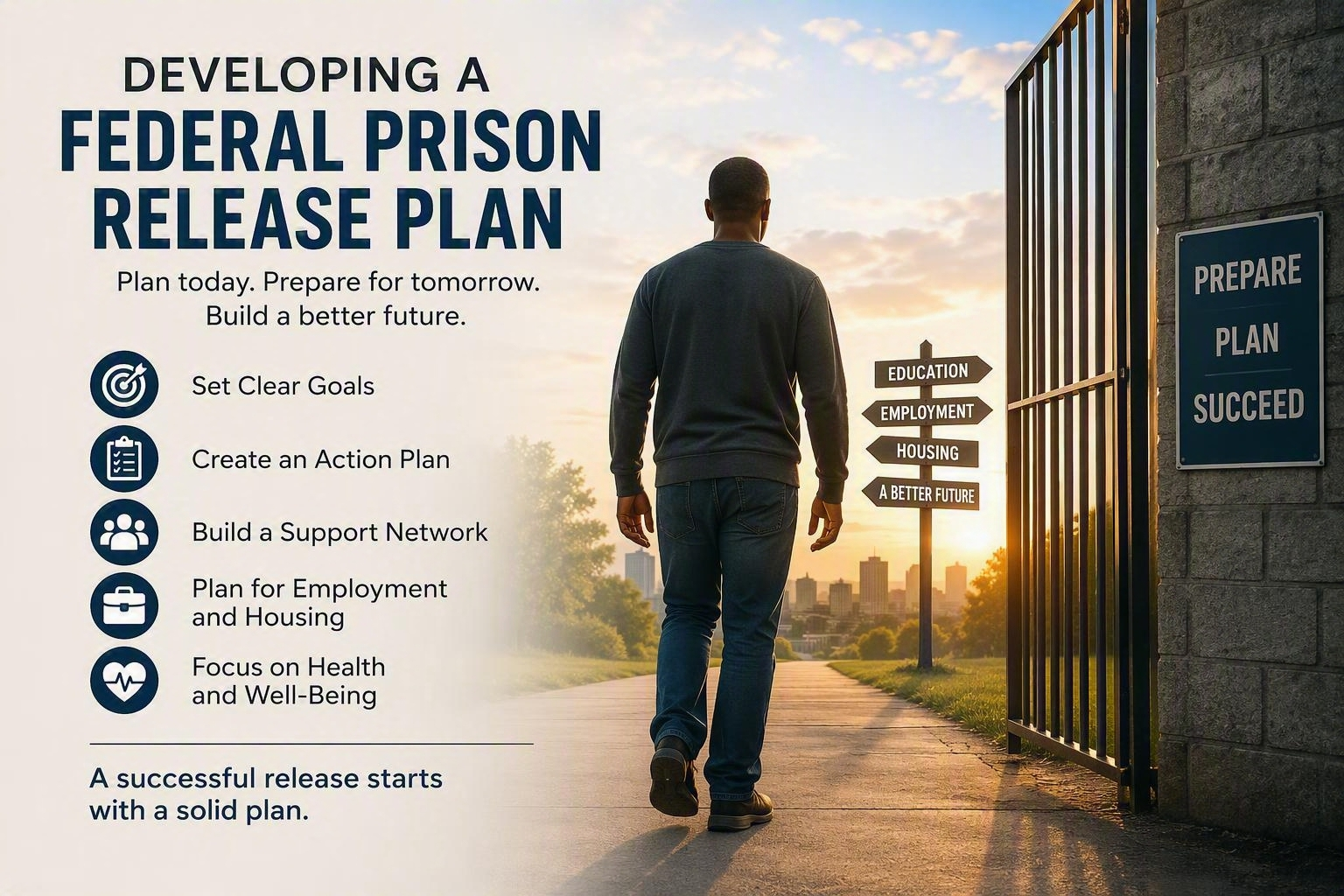
Federal Release Planning: What Will You Tell the Judge?
Many federal judges want to know one thing before sentencing:
“What are you going to do when you get out?”
As Judge Rice explained:
“I often engage a defendant in allocution so I can hear more about them.”
Your answer can influence how the court views your future, your likelihood of success, and your risk of reoffending.
Are You Prepared?
A strong Release Plan should begin before your Presentence Interview (PSI), not after sentencing. Without a clear plan, judges, probation officers, and Bureau of Prisons staff have only the prosecution’s version of your story.
A well-developed Release Plan demonstrates:
- Accountability
- Personal growth
- Family and community support
- Employment goals
- Housing stability
- Commitment to a law-abiding future
The Six Stages of Effective Release Planning
1. Before the Presentence Interview
Develop your personal narrative and release strategy for incorporation into the Presentence Report (PSR).
2. Before Sentencing
Refine and strengthen your plan to show the court you have a realistic path forward.
3. During Incarceration
Document every positive step you take:
- Educational courses
- FSA programming
- Vocational training
- Mentoring and leadership activities
- Personal development achievements
Proper documentation can be critical when seeking earned time credits, halfway house placement, and other benefits.
4. Preparing for Release
Create a detailed reentry plan covering:
- Employment
- Housing
- Transportation
- Healthcare
- Family support
- Financial stability
A strong reentry plan can help demonstrate that you are a good candidate for Residential Reentry Center (Halfway House) placement.
5. Post-Release Transition
Release from prison is only the beginning. Success requires understanding and complying with Bureau of Prisons, halfway house, and community supervision requirements.
6. Supervised Release and Probation
Many individuals find this to be the most challenging phase.
Even after incarceration ends, you remain under federal supervision. Following all conditions of release and maintaining communication with your probation officer is essential to avoiding violations and protecting your freedom.
Your Release Plan Influences Key Decision-Makers
Your plan will be reviewed by stakeholders throughout the federal justice process, including:
- Your defense attorney
- Probation officers
- Prosecutors
- The sentencing judge
- Bureau of Prisons staff
- Case managers and unit teams
- Residential Reentry Managers (RRM)
- Federal probation officers
Tell Your Story Before Others Tell It For You
Without your narrative, stakeholders often see only the indictment and offense conduct. A comprehensive Release Plan allows you to present the complete picture: who you are, what you have learned, and how you intend to build a successful future.
The best Release Plans start before the Presentence Interview and continue to grow throughout incarceration and reentry.
Need Help Building a Winning Federal Release Plan?
Our Release Planning guidance helps federal defendants develop a credible, documented roadmap for sentencing, incarceration, and successful reentry.
Contact us today to start building a Release Plan that demonstrates accountability, rehabilitation, and readiness for a successful future.