

Healthcare and Federal Procurement Fraud: Are You A DOJ Target?
Our Dream. Our Future.
Most of us devoted years of training, sacrifice, and education debt to help patients — not to practice under the threat of DOJ scrutiny and AI-driven investigations where even gray-area clinical decisions can be portrayed as criminal conduct.
The DOJ is targeting the Healthcare and Immigration.
You Have Too Much at Stake — Financial Exposure and Criminal Liability Are Real
-
No individual or organization sets out intending to commit fraud.
- But today, enforcement is increasingly data-driven.
Be aware:
- The DOJ is constantly using its AI and Data Analytics to flag unusual billing patterns and anomalies.
- Bottom line: Even unintentional issues can trigger scrutiny—so proactive compliance isn’t optional when the risks are this high.
-
You do not want to attract their attention because, as Judges will tell you, the DOJ wants Convictions!
-
Don’t be the Dog in this fight.
Prevention includes following your policies/procedures, implementing internal and external audits, while keeping up with billing and coding updates.

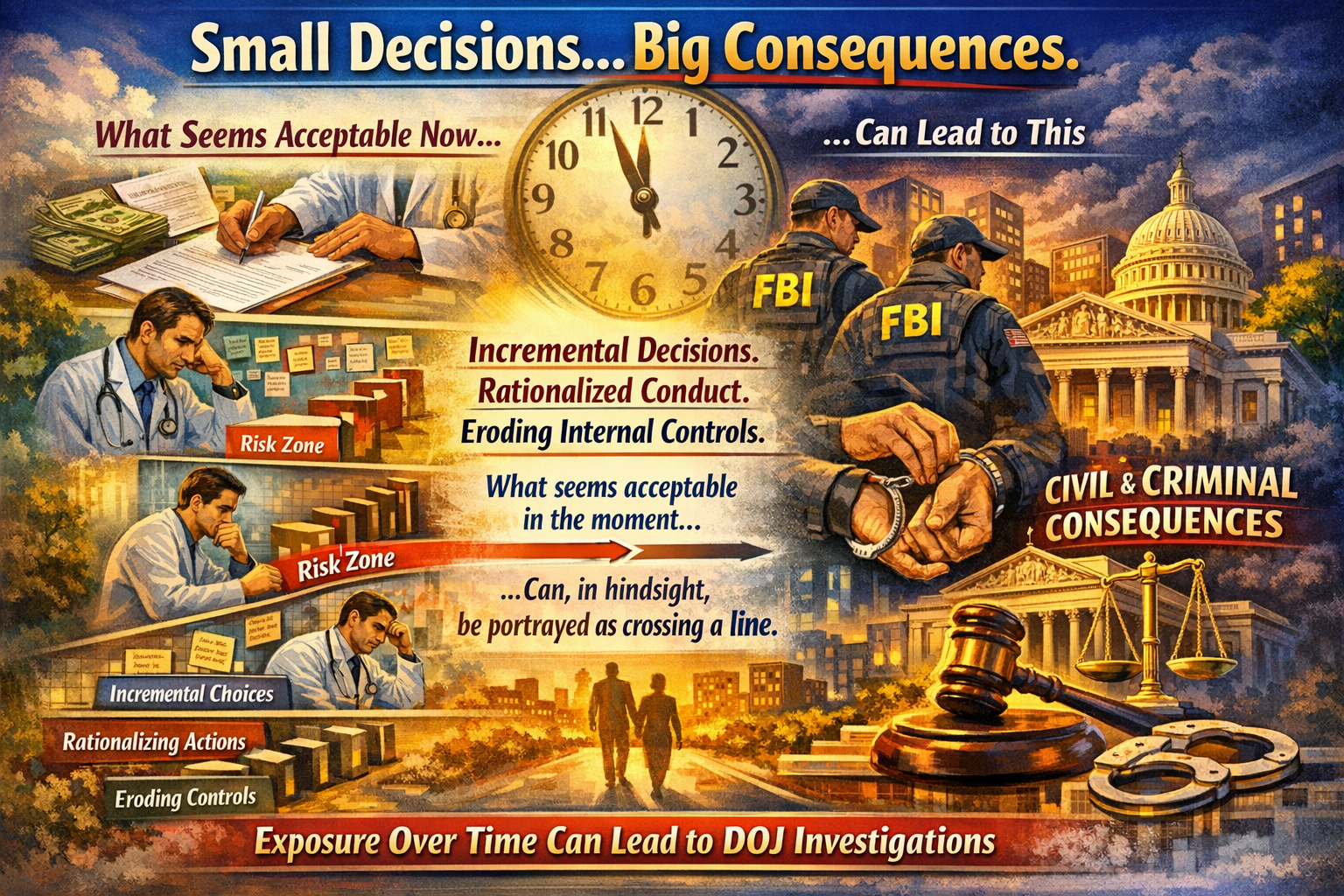
In many cases, exposure does not arise from a single intentional act, but from incremental decisions over time—small deviations, rationalized conduct, or the gradual erosion of internal controls. What appears acceptable in the moment can, in hindsight, be portrayed as crossing a line with civil or even criminal consequences.
For healthcare executives, compliance officers, federal contractors, and participants across the healthcare supply chain, the line is no longer defined solely by statutes or regulations — it is increasingly being defined by data, algorithms, billing patterns, predictive analytics, and AI-driven enforcement models.
-
Defense Contractors Charged with Bribery and Fraud in U.S. Army Pacific Innovation Campus Deal. Forth
-
Government contractors beware: DOJ Antitrust Division doubles down on procurement bid rigging.
-
CFO of Boston-Area Spinal Device Company Pleads Guilty to Kickback Scheme
h
m
An Unmistakable Priority: Healthcare and Procurement Fraud
- The DOJ has made clear through its policies, public statements, and recent enforcement actions that healthcare fraud and federal procurement fraud remain among its highest enforcement priorities — with increasing reliance on data analytics, whistleblower actions, and AI-driven investigative tools. Woman at center of sprawling Minnesota fraud case gets nearly 42-year prison sentence.

h
Your industry is under continuous scrutiny.
m
A Structural Shift: Enforcement Driven by Data and AI
- The most consequential evolution in enforcement is not simply volume—it is methodology.

The DOJ has institutionalized reliance on:
-
Advanced data analytics
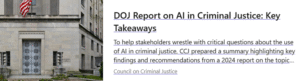
AI WORKS FOR FREE, NO PAY RAISES OR TIME OFF, AND IS SYSTEM LEARNING
They work 24/7/365.
Through its Civil Division, the DOJ has formally acknowledged that“sophisticated data analytics have become an increasingly important means of identifying fraud trends and uncovering patterns of misconduct across federal programs.”[2]
This shift is operationalized through initiatives like FOCUS (Fraud Oversight through Careful Use of Statistics), announced on April 30, 2026.[3] The initiative is designed to identify and prioritize False Claims Act cases based on public data analysis rather than insider complaints, reflecting a major paradigm shift in enforcement.[4]
g
DOJ DATA MINING INITIANTIVE
DATA MINING. Deputy Assistant Attorney General Brenna E. Jenny emphasized that the Department is actively seeking engagement with data analysts capable of identifying fraud signals, noting that participants must demonstrate how their methodologies“provide a reliable basis for identifying high-quality, actionable False Claims Act matters.”[5]
- There are unquestionably bad actors in healthcare, but the implication is clear: enforcement agencies are increasingly using data analytics and AI-driven models to cast a far wider net across the industry.
- Government Contractors Beware: DOJ Antitrust Division Doubles Down on Procurement Bid Rigging. The National Law Review. A former service member pleaded guilty to conspiring to commit wire fraud and bribery-related charges for his role in a US$37 million fraud…
v
Fraud detection is no longer reactive—it is continuous, data-driven, and scalable.
Coordinated Enforcement and Expanding Strike Forces
- The DOJ is also expanding its operational reach through coordinated enforcement.
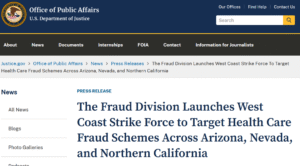
On April 30, 2026, the DOJ announced the creation of the West Coast Health Care Fraud Strike Force, a multi-district initiative bringing together federal prosecutors, investigators, and data analytics resources to target complex fraud schemes.[6]
This Strike Force integrates:
- This Strike Force integrates DOJ Fraud Division resources, U.S. Attorney’s Offices across multiple jurisdictions, and federal law enforcement and regulatory partners into a coordinated enforcement framework.
THE RESULT.
Woman at center of sprawling Minnesota fraud gets nearly 42-year prison sentence
-
AP News, The U.S. Justice Department, however, said she was at the top of the “single largest COVID-19 fraud scheme in the country.” “I understand I failed. I failed …
-
Historically, the Health Care Fraud Strike Force model has charged thousands of defendants and uncovered tens of billions of dollars in fraudulent billing, underscoring its effectiveness as a primary enforcement tool.[7]
For both counsel and operators, the takeaway is direct:
Enforcement is coordinated, data-enabled, and accelerating.
CMS, AI, and the Rising Compliance Standard
Regulatory oversight is evolving in parallel.
- The Centers for Medicare & Medicaid Services (CMS) has introduced the WISeR Initiative (Wasteful and Inappropriate Service Reduction), which leverages artificial intelligence and machine learning to review medical-necessity and prior-authorization decisions.[8]
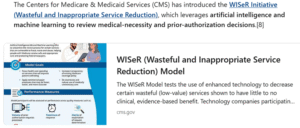
The program is explicitly designed to target services vulnerable to fraud, waste, and abuse, while improving Medicare payment integrity.[9]
This introduces an emerging area of liability:
-
AI-assisted documentation and billing may serve as enforcement triggers
-
Providers remain responsible for the outputs and accuracy of AI-supported processes
-
Data inconsistencies or anomalies may be interpreted as potential false claims
The result is a new compliance reality:
Organizations are accountable not only for conduct, but for the systems they rely on.
The Reality of Consequences
Recent enforcement outcomes demonstrate the magnitude of risk:
Multi-year—and even multi-decade—prison sentences
-
A judge in the Middle District of Florida sentenced a defendant to 63 months in federal prison for submitting a fraudulent Paycheck Protection Program (PPP) loan application. The court ordered forfeiture in the amount of $739,582.
Substantial forfeitures and financial penalties
-
DOJ Seizes $2 Million in Data-Driven Medicare Fraud Action: Key Insights for Health Care Providers, The National Law Review
Reputational damage, exclusion from federal programs, and operational disruption
-
DOJ Activity Indicates Rising Antitrust Risk For Hospitals – Law360 Healthcare Authority,
-
A judge in the Middle District of Florida sentenced a defendant to 63 months in federal prison for submitting a fraudulent Paycheck Protection Program (PPP) loan application. The court ordered forfeiture in the amount of $739,582.
h
Enforcement actions increasingly originate from:
-
Data analytics identifying statistical anomalies
-
Qui tam whistleblower filings (including “data miner” cases)
-
Certifications submitted in the ordinary course of business
As DOJ has noted, data miners—external actors analyzing public datasets—are now responsible for a substantial portion of FCA filings.[10]
If you run a hospice or home health agency, this 60-second clip could matter to you.
i
As DOJ has noted, data miners—external actors analyzing public datasets—are now responsible for a substantial portion of FCA filings.[10]
A Narrow but Meaningful Option: Voluntary Self-Disclosure
The DOJ’s Corporate Enforcement and Voluntary Self-Disclosure Policy (CEP) continues to provide incentives for organizations that act early.

DOJ Policy (simplified):
- Companies that: Self-report misconduct early, Fully cooperate, Fix the problem (remediation)
→ may receive lenient outcomes, such as:
- Declination (no prosecution)
- Non‑Prosecution Agreement (NPA)
- Reduced penalties
- BUT these benefits depend on:
Bottom line: The DOJ rewards companies that come forward early and fix issues, but serious wrongdoing or delays can reduce or eliminate those benefits.
h
 m
m
Waiting until an investigation begins may eliminate meaningful options.
From Awareness to Action
For legal advisors and business leaders alike, the implications are clear:
Key implications:
- Assume your data is continuously analyzed for anomalies
- Expect external triggers (whistleblowers, regulators)
- Investigations may begin before issues are internally detected
What to do:
- Run targeted, data-driven compliance audits
- Review AI and automated decision-making governance
- Strengthen internal controls and documentation
- Involve experienced counsel early when risks emerge
Bottom line: Organizations need to shift from reactive compliance to proactive, data-informed risk management.
Final Perspective
The enforcement landscape has transitioned from reactive to predictive.
Enforcement has shifted from reactive to predictive:
- Intent still matters—but data now drives detection.
Recent actions highlight this shift, with data analytics playing a central role in identifying fraud.
For healthcare and federal contractors:
- Compliance basics (policies, audits) are now just the starting point.
- The margin for error is shrinking.
- The cost of mistakes is rising rapidly.
Bottom line: Organizations must move beyond basic compliance to proactive, data-driven risk management—or face significantly higher consequences.
DOJ Seizes $2 Million in Data-Driven Medicare Fraud Action: Key Insights for Health Care Providers, The National Law Review
If you hear that the FBI has been asking questions,
-
You need Legal Representation, and winning is possible through a strategic conversation with counsel.
- When Choosing Your Legal Team: 14 Questions to ask.
k
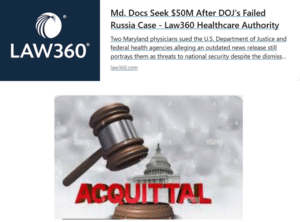
ACQUITTALS ARE POSSIBLE
l
p
BUT, IF YOU HAVE BEEN CONVICTED OR PLEAD GUILTY.
Do you have a plan to reduce your time and influence where you serve, including—
- Shorter sentence options (mitigation, credits, legal reductions)
- Better placement (facility, programs, conditions)
- Early release pathways (good time, programs, etc.)
- It’s a proactive strategy to spend less time and serve it under the best conditions possible.
l
✅ I don’t rely on AI. My focus is on working closely with you to craft a Personal Narrative that Resonates with your judge. Together, we will create a story (Including Medical, the Good, Bad, and the Ugly) that is Compelling and Authentic.
k
l
Footnotes
[1] See, e.g., Woman at center of sprawling Minnesota fraud case gets nearly 42‑year prison sentence (Associated Press, May 21, 2026) (reporting DOJ description of the scheme as the “single largest COVID‑19 fraud scheme in the country”).
[2] U.S. Dep’t of Justice, Civil Division, statement of Assistant Attorney General Brett A. Shumate (Apr. 30, 2026), noting the growing importance of data analytics in identifying fraud. [justice.gov]
[3] U.S. Dep’t of Justice, Civil Division Announces FOCUS Initiative for Data Miners Filing Qui Tam Complaints (Apr. 30, 2026).
[4] See id.; see also discussion of data-miner-driven FCA cases and use of publicly available datasets to identify fraud patterns. [jdsupra.com]
[5] Id. (Statement of Deputy Assistant Attorney General Brenna E. Jenny regarding analytical rigor and fraud detection methodologies. [justice.gov]
[6] U.S. Dep’t of Justice, Fraud Division Launches West Coast Strike Force to Target Health Care Fraud Schemes (Apr. 30, 2026).
[7] Id. (noting that the Strike Force model has led to the prosecution of over 6,200 defendants responsible for more than $45 billion in fraudulent billings). [justice.gov]
[8] Centers for Medicare & Medicaid Services, WISeR (Wasteful and Inappropriate Service Reduction) Model.
[9] Id. (describing use of AI/ML technologies to target services vulnerable to fraud, waste, and abuse and improve payment integrity). [cms.gov]
[10] See discussion of data-miner-driven qui tam filings and growing FCA activity. [jdsupra.com]