Trump Grants Clemency to 30 Federal Offenders
Trump Issues New Round of Federal Clemency Grants
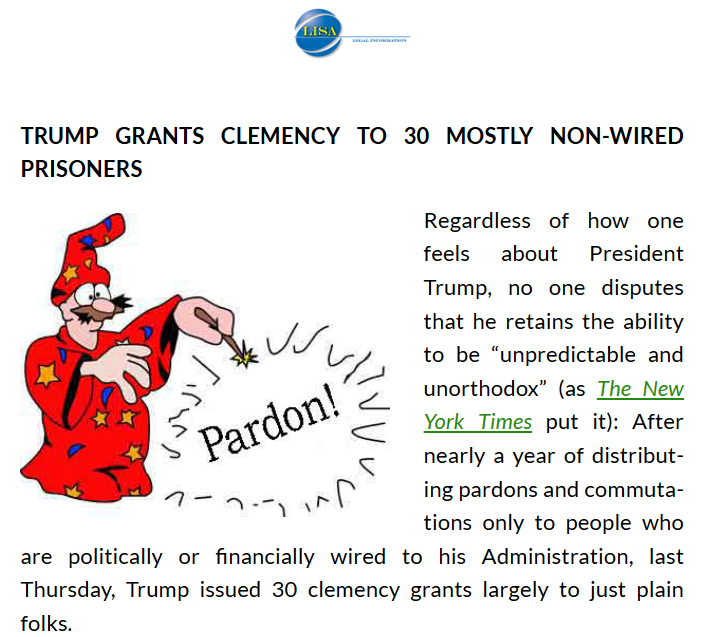
President Trump issued pardons and commutations for 30 federal offenders. Learn how clemency, sentence reductions, and other post-conviction remedies may impact federal criminal cases.
Reports indicate that many of the recipients were nonviolent federal offenders serving lengthy sentences, including some convicted of drug-related offenses.
The latest clemency actions have drawn attention because they appear to include a broader range of applicants rather than only high-profile individuals. Among the recipients were people seeking relief from long federal prison terms and others facing significant personal or family hardships.
Presidential clemency remains one of the most powerful forms of post-conviction relief available in the federal system. A pardon may forgive a federal offense, while a commutation can reduce or end a prison sentence. For individuals who have exhausted their appeals and other legal remedies, clemency can provide a meaningful opportunity for a fresh start.
As federal clemency continues to receive national attention, inmates and families are increasingly exploring whether a pardon or commutation may be available in their cases.
Trump’s use of clemency has led to a surge in lawyers and lobbyists trying to get cases noticed in exchange for large fees. His recent low-key clemency action might be a strategy to counter the “pay-to-play” criticism regarding his grants to 1,700 people, including 1,500 January 6th rioters, some of whom spent over a million dollars to secure their grants.
- NY Times, Trump’s Latest Clemency Grants Benefit Drug Offenders, Union Boss (September 4, 2026)
- Alice Marie Johnson @alicemariefree, Post on X (September 4, 2026)
- Marijuana Moment, Trump Releases More Federal Marijuana Prisoners As DEA Considers Rescheduling Cannabis (September 4, 2026)
- Politico, Former pardon attorney sues DOJ for firing over Mel Gibson gun rights case (September 2, 2026)
- Complaint, Oyer v. Blanche, Case No 1:26-cv-3092 (Doc. 1) (D.D.C., September 3, 2026)
~ Thomas L. Root