

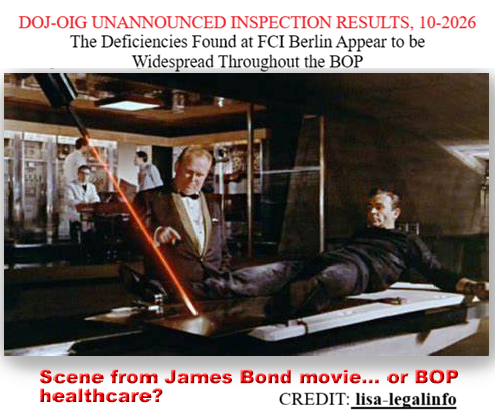
While the DOJ OIG Inspection Identified Problems at FCI Berlin
These issues are apparently present nationwide.
A January 15, 2026, unannounced inspection by the U.S. Department of Justice Office of Inspector General (OIG) identified significant staffing, healthcare, security, and programming challenges at Federal Correctional Institution (FCI) Berlin in New Hampshire.
Key findings included:
- Staffing shortages: Vacancies in correctional, medical, and psychology services increased workloads and contributed to programming delays. Non-custody employees were reassigned to correctional duties, while overtime raised concerns about staff fatigue and burnout.
- Delayed medical care: Physician and psychologist vacancies contributed to months-long delays in some routine medical appointments and difficulties arranging outside specialty care. But even when seeing an outside specialist, the BOP Clinical Director is not required to implement their specialist’s recommendations.
- Healthcare safety risks: Inspectors identified unsafe medication practices, improperly stored hazardous materials, inadequate supervision, and concerns involving opioid use disorder treatment.
- Security weaknesses: Inconsistent security rounds, visible contraband, nonoperational detection equipment, and failures to follow search procedures increased safety concerns.
- ICE-related operational pressures: Housing ICE detainees (which has an impact on an understaffed institution, with deteriorating infrastructure and broken security equipment) alongside BOP inmates creates additional processing, security, and healthcare demands while restricting inmate movement and therefore less access to programs.
The findings highlight how staffing shortages and competing operational demands can affect healthcare access, rehabilitation programs, inmate safety, and daily operations in federal prisons.
For individuals preparing for federal incarceration, this requires thorough preparation for their PSI Interview.
- FCI Berlin’s inspection underscores the importance of documenting medical needs and understanding how healthcare and programming limitations may affect your prison placement request.